


-
- English
- Deutsch
- Spanish
-
- General Diagnostics
- Treatment
- Tools/Materials
- Basic/General Knowledge
- Research
- Events
- Organisations
-
-
-
-
-
-

-
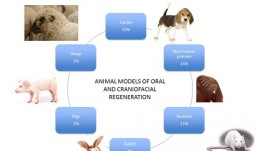

Pre-Clinical Model Development
Technological advances in engineering materials and biological agents continue to provide new potential therapies for patients whose quality of life and physical well-being are affected by severe orofacial defects, tooth loss or the consequences of gum disease. However, getting new therapies into everyday use by dental surgeons is not simple. Currently, only one in every thousand newly developed materials reaches patients, in a process that can take decades, and incurs enormous costs. To ensure that all suitable therapies developed in the laboratory become available to dentists, preclinical studies in animals must streamline neatly with clinical trials in humans, which can only happen if approval is gained by the regulatory authorities. This chapter provides guidance on the many practical issues that must be addressed before, during and after conducting animal experiments, in order to achieve the rigorous safety, efficacy and quality standards that must be met for human use. The emphasis is on effective planning and design, and choosing the most suitable animal models and techniques. The authors also outline ways to optimize and standardize experimental approaches, and set meaningful endpoints that translate directly into the clinical arena. -
-
-
THE BOX - THE GLOBAL OSTEOLOGY COMMUNITY PLATFORM
It is a big challenge to link scientists and practitioners in a continuously growing global context and also a fundamental part of the Osteology Foundation’s mission: promoting research and education in oral tissue regeneration worldwide. With this in mind, the Osteology Foundation has set up the novel Global Osteology Community Platform THE BOX, which on the one hand provides information and tools, but on the other also connects scientists and practitioners worldwide and supports all existing activities of the Osteology Foundation online. -
THE OSTEOLOGY FOUNDATION 2016
The Osteology Foundation’s motto is „Linking Science with Practice in Regeneration“. The foundation was established in 2003 and its core activities include funding of research projects and organisation of national and international symposia throughout the world. In recent years, the Foundation has expanded its focus. Today, it also offers courses and textbooks specifically for researchers, as well as the online platform THE BOX, which connects practitioners and scientists in the field of oral tissue regeneration worldwide, and provides tools and information. www.osteology.org -
THE OSTEOLOGY CASE BOX
The Osteology CASE BOX contains cases uploaded for different clinical scenarios. User decides whether they want to share their cases, or whether they only add the data for overall evaluation and compare it with the mean. -
Collaboration: SEPA & Osteology Foundation Award
The Spanish Society of Periodontology and Osseointegration (SEPA) and the Osteology Foundation have launched a new cooperation project, aiming to promote research in regenerative therapies, and the publication of the results. Researchers are invited to submit abstracts for a special poster presentation session and subsequent discussion at the50th Annual Meeting of the SEPA, which will take place in Valencia on 12-14 May 2016. Programme The presented work should be from the field of oral regenerative therapies. Prizes will be awarded to the three best posters. The maximum number of posters for this call is 15. The posters will be presented independently of the other posters at the Annual Meeting, having their own space and jury. The winners have the unique opportunity to present also at theNational Osteology Symposium Spain,which will be held in Barcelona in February 2017. More information about this Osteology Symposium will follow soon. Summaries of the winning entries, after review by the Editorial Committee, will also be published in the journal of the society (Clinical Periodontology). For details on online submission of abstracts, format, and required information please check the following website of the SEPA (in Spanish) Premios SEPA-Osteology Foundation Deadline: 8 April 2016 -
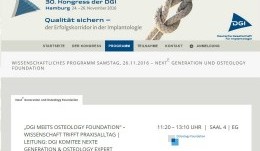
DGI meets Osteology Foundation
At the 30th annual congress of the DGI, the German Society for Implantology (Deutsche Gesellschaft für Implantologie), which will take place on 24 26 November in Hamburg, Germany, the Osteology Foundation will contribute to the program with a session jointly organised with the DGI. The title of the session on Saturday, 26 November, is Science meets everyday practice and comprises presentations as well as interactive discussion. It is chaired by the DGI Committee Nexte Generation and the Osteology Expert Council. Moderators are Frank Schwarz (President DGI, OF Board), Ilja Mihatovic (OF Expert Council, DGI Nexte Generation), and Christian Schmitt (OF Expert Council). The session will be held in German. Registration and further information on the DGI congress website. Programme 11:20 - 11:30 Eröffnung der DGI/Osteology Session Introduction of Osteology Foundation F. Schwarz, Düsseldorf 11:30 - 11:55 Wissenschaft für die tägliche Praxis: Knochenmetabolismus R. Gruber, Wien, A 11:55 - 12:20 Wissenschaft für die tägliche Praxis: Chirurgische Faktoren fr den Langzeiterfolg von Implantaten D. Buser, Bern, CH 12:20 - 12:45 Wissenschaft für die tägliche Praxis: Augmentative Verfahren B. Al-Nawas, Mainz, D 12:45 - 13:10 Interaktive Podiumsdiskussion: Was hat sich klinisch bewhrt und welche Fragen muss die Wissenschaft noch beantworten? -
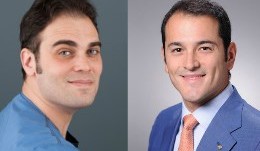
Expert Council extended
Gustavo Avila-Ortizis Associate Professor with Tenure at the Department of Periodontics at theUniversity of Iowa,USA, and alsoDirector of the Visiting Scholar Program at the same department. He holds a DDS and PhD degree from the University of Granada, Spain, and also a Master degree from the University of Michigan, USA. Gustavos profile in The Box Giorgio Pagniis Periodontistin private practice in Florence, Italy, and instructor at the University of Milan. Hereceived his DDS degree from the University of Firenze, Italy, and holds aMaster degree in Periodontics and Oral Medicine from the University of Michigan, USA. Giorgios profile in The Box The Osteology Expert Council was set up in 2010 in order to expand the Osteology Foundations international network and improve collaboration. Currently, it has 35 members that are a valuable part of the Foundation and drivers for innovative new projects within thethree committees. Both,Gustavo Avila-Ortiz, as well as Giorgio Pagni have already tremendously contributed to past and ongoing projects of the Foundation, in particular to the development of THE BOX. Gustavo Avila-Ortiz (left), and Giorgio Pagni More information about the Osteology Expert Council The Osteology Foundation Board has elected two new members to its Expert Council: Gustavo Avila-Ortiz, USA, and Giorgio Pagni, Italy. Both have already contributed to the Foundations activites over the last years. -

New Large Clinical Grants Programme
The Osteology Foundation calls for applications for the new Large Clinical Grants. Theprogram aims to support hypothesis driven clinical research by well-established research groups with demonstrated clinical research expertise. There are two stages in the application process: Stage 1 Applicants can submit an abstract of their proposed project by15 November. The Osteology Science Committee selects projects which then progress to the next stage. Stage 2 Applicants are invited to submit their full application. The submissions are then evaluated for potential funding by the Osteology Science Committee. Study types Research types falling within the scope of the Osteology Foundation are for example: RCT (also small multi centres) and quasi RCT Case controlled studies Prospective cohort studies Surgical techniques (also in combination with biologics, drugs and devices) e.g.: Biologics Dugs (also e.g. phase I / phase II - pilot studies, proof of principle) Devices (also e.g. phase I / phase II - pilot studies, proof of principle) Combination products Who can apply? Well-established research groups that demonstrated clinical research expertise. Amount of funding Grants are limited to 350000 Swiss Francs with a maximum project duration of three years. Awarding criteria Hypothesis answering a clinical research question relevant to the field of oral and maxillofacial regeneration Methodology Facilities and expertise to conduct a GCP study Sound and transparent budget Application guidelines Apply now! -
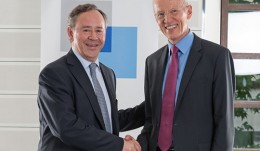
Hand-over of presidency in Zurich
On the occasion of the Osteology Board Meeting on June 22, 2015 in Zurich, the presidency of the Osteology Foundation was officially handed over from Christoph Hmmerle to Mariano Sanz. Professor Christoph Hmmerle served as president of the Osteology Foundation for 12 years, ever since it was established. Looking back at his term of office, he said in an interview prior to the meeting in Zurich: The Osteology Foundation has grown to be a highly respectable organization over recent years. I think the key elements for this success have been the excellent teamwork among the members of the Foundation Board, the dedication of those working in the office and, very importantly, the support and the academic freedom granted by the Founder. Read the full interview with Christoph Hmmerle Even though his term of office as president of the Osteology Foundation has ended, Christoph Hmmerle will remain a member of the Board for two more years, contributing to the development of the Foundation and its activities with his great experience and knowledge. Professor Mariano Sanz, who in Zurich officially took over as new president of the Osteology Foundation, has been a member of the Board for 12 years, he also served as Chairmen of the Education Committee and Member of the Executive Board for several years. For him, the Foundation and its activities are therefore already familiar - with Mariano Sanz, the Osteology Foundation is in the best hands, said Christoph Hmmerle. Mariano Sanz thanked him, and said that in the past 12 years Christoph Hmmerle has done a superb job. Not only as a result of his vision and work, but also through his personal and social skills has the Foundation become a friendly family of leaders all striving for the same objective, which is to fulfil the mission of the Osteology Foundation. Mariano Sanz does not intend to change the strategy of the Osteology Foundation. We will continue the successful work, and wherever possible extend it to other parts of the world, he said in an interview, and added: we shall consolidate our accomplishments, but at the same time open up to new technologies and improve communications media with the goal of widening our reach in order to better fulfil our mission. Read the full interview with Mariano Sanz -
Christoph Hämmerle: with team effort and trust to success and reputation
Professor Christoph Hmmerle has served as president of the Osteology Foundation for 12 years. His term of office came to a close at the end of May 2015. In an interview, he looked back over the past 12 years and how the Osteology Foundation has developed since it was founded by Dr Peter Geistlich, who he reveres with gratitude and respect. The Osteology Foundation was founded 12 years ago, and you have been its President since then. It seems that the Foundation has now grown up as it were. What are your recollections, when you look back on the development of the Foundation? Christoph Hmmerle: The Osteology Foundation has grown to be a highly respectable organization over recent years. I think the key elements for this success have been the excellent teamwork among the members of the Foundation Board, the dedication of those working in the office and, very importantly, the support and the academic freedom granted by the Founder Dr Peter Geistlich. When you look back, what were the highlights during those 12 years? Christoph Hmmerle: The development of the Osteology Foundation has been a continual step-by-step process. There were many highlights during this development. Some key events surely were the National and International Osteology Symposia, which have grown steadily in size and reputation. Another important aspect has been the grant program providing support of research projects, which has led to many publications advancing soft and hard tissue regeneration in science and practice. Yet another true highlight was the development of the Osteology Research Academy (ORA). This Academy offers education in research methodology to anyone interested and allows the participants of the courses to gather knowledge, acquire skills, as well as build and develop valuable research networks. The Foundation was founded by Dr Peter Geistlich in 2003. How was your relationship with him? Christoph Hmmerle: He truly was an elder statesman, a charismatic person who was very much respected by those around him. I enjoyed a trustful and respectable relationship with him. When I think of him, it is with gratitude and respect for what he did, what he achieved and who he was. Can you share one or two personal moments with Dr. Peter Geistlich that you remember well? Christoph Hmmerle: I felt very touched, when he offered me first name terms during a dinner. I know that he only offered this to a few people. I interpreted it as a sign of his trust in me and in our relationship. I also remember very well the charismatic way in which he made his statements, when we did recordings for an Osteology film. And another situation that sticks in my mind was during the Osteology Symposium in Monaco in 2007, when I had the honor of presenting him with a gift. He was a rather reserved person, who usually didnt like to be at the center of attention. But on this occasion he came onto the stage to accept the gift and the gratitude of the audience. Did the Foundation experience any crisis or major problems during your 12 years of presidentship? Christoph Hmmerle: No, we never experienced a crisis. There has always been a high level of dedication from the Osteology Office, sustained support from the founder and enthusiasm for the Foundation and its causes from within the Osteology Board. Of course, there were situations and decisions that called for intensive discussions, but ultimately we always found beneficial solutions paving the way for further progress of the Foundation. It seems that the Osteology Foundation managed to put a large proportion of ideas into practice. It now offers a broad range of activities and tools for Scientists and Practitioners. At the outset, did you expect that the Osteology Foundation would grow to such an extent and become so successful? Christoph Hmmerle: Definitely not. We did not foresee this significant and wonderful development. All this became reality, because we recognized the needs in this field, reacted to changes, identified important gaps and reacted positively to all these challenges. We responded to the needs in the field by offering education and training for researchers and clinicians, providing meaningful information in the form of research guidelines, offering grants for research projects, organizing funding for academic scholarships, reflecting the state of the science by conducting consensus conferences, etc. Looking back over the past 12 years of the Foundation, we have clearly offered value to the community, which has been well received and has significantly contributed to the positive development in the field of hard and soft tissue regeneration. Is there something of which you are particularly proud, or something special that you feel you have personally achieved during your presidentship? Christoph Hmmerle: I believe it is most important that everybody has had the opportunity to put their influence and personal strength to good effect. Within the Board, the Office and the relationship with the Founder, there has always been a spirit of trust and respect allowing everyone to work to the best of his or her capabilities. I consider this one of the most important aspects in the success of the Osteology Foundation. You are not saying a final farewell to the Foundation when your period of office ends in June. You will remain a member of the Foundation Board for two more years. Are there any specific projects that you plan to realize during this time? Christoph Hmmerle: When ones term is over, it is time to step down. But of course, I will provide support and advice where needed. With the new members of the Board and the Executive Board I am fully convinced that there will be further positive development of the Osteology Foundation. At this point, I would also like to express my special thanks to the Board of Directors of Geistlich, in particular to Dr Andreas Geistlich, for having affirmed their continued support for the future of the Osteology Foundation. When you are no longer president of the Osteology Foundation, what are you going to do with the plentiful free time you have? Christoph Hmmerle: I will have more time to further develop online education. I am fully convinced that online education is becoming a key platform for the exchange of knowledge and for communication in our modern interconnected world. We started a project called Dental Campus back in 2007, which is unique and has a great potential for further development. So, maybe there will be not so much free time waiting for me. But of course I will also enjoy having more time to spend with family and friends, doing sports or being in the mountains. Mariano Sanz will be the next president of the Osteology Foundation in June 2015. Is there something that you would like say to send him on his way? Christoph Hmmerle: I have known Mariano for a long time and we have worked together for several years and on various projects. He is highly experienced and well established as a researcher, a clinician, an academic and a leader. With him as President, the Osteology Foundation will be in the best possible hands! Thank you very much, Professor Hmmerle! Interview: Dr Heike Fania