-
- English
- Deutsch
- Spanish
-
- General Diagnostics
- Treatment
- Tools/Materials
- Basic/General Knowledge
- Research
- Events
- Organisations
-
-
-
-
-
-

-
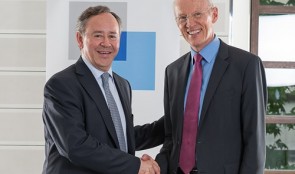

Hand-over of presidency in Zurich
On the occasion of the Osteology Board Meeting on June 22, 2015 in Zurich, the presidency of the Osteology Foundation was officially handed over from Christoph Hmmerle to Mariano Sanz. Professor Christoph Hmmerle served as president of the Osteology Foundation for 12 years, ever since it was established. Looking back at his term of office, he said in an interview prior to the meeting in Zurich: The Osteology Foundation has grown to be a highly respectable organization over recent years. I think the key elements for this success have been the excellent teamwork among the members of the Foundation Board, the dedication of those working in the office and, very importantly, the support and the academic freedom granted by the Founder. Read the full interview with Christoph Hmmerle Even though his term of office as president of the Osteology Foundation has ended, Christoph Hmmerle will remain a member of the Board for two more years, contributing to the development of the Foundation and its activities with his great experience and knowledge. Professor Mariano Sanz, who in Zurich officially took over as new president of the Osteology Foundation, has been a member of the Board for 12 years, he also served as Chairmen of the Education Committee and Member of the Executive Board for several years. For him, the Foundation and its activities are therefore already familiar - with Mariano Sanz, the Osteology Foundation is in the best hands, said Christoph Hmmerle. Mariano Sanz thanked him, and said that in the past 12 years Christoph Hmmerle has done a superb job. Not only as a result of his vision and work, but also through his personal and social skills has the Foundation become a friendly family of leaders all striving for the same objective, which is to fulfil the mission of the Osteology Foundation. Mariano Sanz does not intend to change the strategy of the Osteology Foundation. We will continue the successful work, and wherever possible extend it to other parts of the world, he said in an interview, and added: we shall consolidate our accomplishments, but at the same time open up to new technologies and improve communications media with the goal of widening our reach in order to better fulfil our mission. Read the full interview with Mariano Sanz -
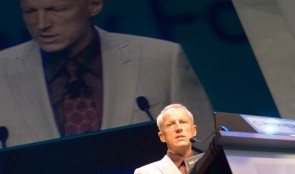
Christoph Hämmerle: with team effort and trust to success and reputation
Professor Christoph Hmmerle has served as president of the Osteology Foundation for 12 years. His term of office came to a close at the end of May 2015. In an interview, he looked back over the past 12 years and how the Osteology Foundation has developed since it was founded by Dr Peter Geistlich, who he reveres with gratitude and respect. The Osteology Foundation was founded 12 years ago, and you have been its President since then. It seems that the Foundation has now grown up as it were. What are your recollections, when you look back on the development of the Foundation? Christoph Hmmerle: The Osteology Foundation has grown to be a highly respectable organization over recent years. I think the key elements for this success have been the excellent teamwork among the members of the Foundation Board, the dedication of those working in the office and, very importantly, the support and the academic freedom granted by the Founder Dr Peter Geistlich. When you look back, what were the highlights during those 12 years? Christoph Hmmerle: The development of the Osteology Foundation has been a continual step-by-step process. There were many highlights during this development. Some key events surely were the National and International Osteology Symposia, which have grown steadily in size and reputation. Another important aspect has been the grant program providing support of research projects, which has led to many publications advancing soft and hard tissue regeneration in science and practice. Yet another true highlight was the development of the Osteology Research Academy (ORA). This Academy offers education in research methodology to anyone interested and allows the participants of the courses to gather knowledge, acquire skills, as well as build and develop valuable research networks. The Foundation was founded by Dr Peter Geistlich in 2003. How was your relationship with him? Christoph Hmmerle: He truly was an elder statesman, a charismatic person who was very much respected by those around him. I enjoyed a trustful and respectable relationship with him. When I think of him, it is with gratitude and respect for what he did, what he achieved and who he was. Can you share one or two personal moments with Dr. Peter Geistlich that you remember well? Christoph Hmmerle: I felt very touched, when he offered me first name terms during a dinner. I know that he only offered this to a few people. I interpreted it as a sign of his trust in me and in our relationship. I also remember very well the charismatic way in which he made his statements, when we did recordings for an Osteology film. And another situation that sticks in my mind was during the Osteology Symposium in Monaco in 2007, when I had the honor of presenting him with a gift. He was a rather reserved person, who usually didnt like to be at the center of attention. But on this occasion he came onto the stage to accept the gift and the gratitude of the audience. Did the Foundation experience any crisis or major problems during your 12 years of presidentship? Christoph Hmmerle: No, we never experienced a crisis. There has always been a high level of dedication from the Osteology Office, sustained support from the founder and enthusiasm for the Foundation and its causes from within the Osteology Board. Of course, there were situations and decisions that called for intensive discussions, but ultimately we always found beneficial solutions paving the way for further progress of the Foundation. It seems that the Osteology Foundation managed to put a large proportion of ideas into practice. It now offers a broad range of activities and tools for Scientists and Practitioners. At the outset, did you expect that the Osteology Foundation would grow to such an extent and become so successful? Christoph Hmmerle: Definitely not. We did not foresee this significant and wonderful development. All this became reality, because we recognized the needs in this field, reacted to changes, identified important gaps and reacted positively to all these challenges. We responded to the needs in the field by offering education and training for researchers and clinicians, providing meaningful information in the form of research guidelines, offering grants for research projects, organizing funding for academic scholarships, reflecting the state of the science by conducting consensus conferences, etc. Looking back over the past 12 years of the Foundation, we have clearly offered value to the community, which has been well received and has significantly contributed to the positive development in the field of hard and soft tissue regeneration. Is there something of which you are particularly proud, or something special that you feel you have personally achieved during your presidentship? Christoph Hmmerle: I believe it is most important that everybody has had the opportunity to put their influence and personal strength to good effect. Within the Board, the Office and the relationship with the Founder, there has always been a spirit of trust and respect allowing everyone to work to the best of his or her capabilities. I consider this one of the most important aspects in the success of the Osteology Foundation. You are not saying a final farewell to the Foundation when your period of office ends in June. You will remain a member of the Foundation Board for two more years. Are there any specific projects that you plan to realize during this time? Christoph Hmmerle: When ones term is over, it is time to step down. But of course, I will provide support and advice where needed. With the new members of the Board and the Executive Board I am fully convinced that there will be further positive development of the Osteology Foundation. At this point, I would also like to express my special thanks to the Board of Directors of Geistlich, in particular to Dr Andreas Geistlich, for having affirmed their continued support for the future of the Osteology Foundation. When you are no longer president of the Osteology Foundation, what are you going to do with the plentiful free time you have? Christoph Hmmerle: I will have more time to further develop online education. I am fully convinced that online education is becoming a key platform for the exchange of knowledge and for communication in our modern interconnected world. We started a project called Dental Campus back in 2007, which is unique and has a great potential for further development. So, maybe there will be not so much free time waiting for me. But of course I will also enjoy having more time to spend with family and friends, doing sports or being in the mountains. Mariano Sanz will be the next president of the Osteology Foundation in June 2015. Is there something that you would like say to send him on his way? Christoph Hmmerle: I have known Mariano for a long time and we have worked together for several years and on various projects. He is highly experienced and well established as a researcher, a clinician, an academic and a leader. With him as President, the Osteology Foundation will be in the best possible hands! Thank you very much, Professor Hmmerle! Interview: Dr Heike Fania -
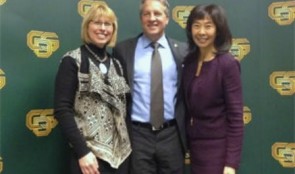
AAP Collaboration: Workshop Proceedings published
Enhancing Periodontal Health Through Regenerative Procedures Fifty-two workshop participants met in Chicago last summer to conduct a systematic review of existing literature, culminating in the development of consensus reports and practical applications to aid practitioners in the clinical environment. Topics of the workshop included the following: Periodontal Soft Tissue Root Coverage Procedures: Managing gingival recession based on current evidence with a primary outcome goal of complete root coverage Periodontal Soft Tissue Non-Root Coverage Procedures: Assessing the need for gingival augmentation procedures (non-root coverage) around natural teeth Intrabony Defects: Periodontal regenerative strategies for the management of intrabony periodontal defects Furcation Defects: How periodontal furcation defects should be managed via periodontal regenerative therapy and what parameters should be used for treatment selection Emerging Regenerative Approaches for Periodontal Reconstruction: Can emerging technologies for periodontal regeneration become clinical reality? Each practical applications paper describes a specific clinical situation, different approaches that may be considered in its management, and how an expert makes a treatment decision based on the provided evidence. Clinical Advances in Periodontics also offers illustrative images and videos that further detail the clinical situation, how it was managed, and its expected treatment outcomes. How the workshop came to be and what the findings mean for periodontal practice The2014 AAP Regeneration Workshopon the topic Enhancing Periodontal Health Through Regenerative Procedures was of huge interest to the Osteology Foundation, and therefore it was supported with an educational grant. The international consensus meetingwas co-chaired by theOsteology BoardmembersWilliam V. GiannobileandPamela K. McClain. We are excited to announce that the proceedings of this workshop have now been published in a special supplement of the Journal of Periodontology, and are available online with free access. Proceedings of the 2014 AAP Regeneration Workshop The publication is a great result of the first joined efforts of the AAP and the Osteology Foundation. The results havedemonstrated that regenerative procedures are effective and predictable treatment options for helping patients retain their natural dentition. The workshop was an amazing collaborative effort that provides the most current consensus of therapies and technologies in regenerative treatment, sayd AAP president Joan Otomo-Corgel at a press-conference in Chicago, when the publication was announced. Were thrilled to share the results of the these dynamic discussions. This bell weather information will provide tremendous benefit to the periodontal specialty, the dental community, and the patients we treat. -

New Osteology Research Scholarship Programme
Research drives advances in science, and promoting research in the field of oral tissue regeneration is one of the core activities of the Osteology Foundation. That is why the Foundation is continuously expanding its activities in this field. New in 2015: the Osteology Foundation is now offering one-year Research Scholarships for young investigators to develop their career in the field of oral tissue regeneration. The aim of the Osteology Foundation is to offer scholars an outstanding environment and expertise on clinical and basic research. Osteology Scholarship Centres The scholars will work on a research project teaming up with their mentors at one of the Osteology Scholarship Centres, which are among the worlds leading research institutes in oral regeneration. The Osteology Scholarship Centres are: University of Gothenburg (Prof. Christer Dahlin) University of Michigan School of Dentistry (Prof. William Giannobile) Medical University of Vienna School of Dentistry (Prof. Reinhard Gruber) University of Zurich (Prof. Christoph Hmmerle) Amount of funding and application details The Research Scholarships consist of 35000 Swiss Francs per scholar for a twelve month stay in one of the Osteology Scholarship Centres, and are offered annually. All young investigators with an academic affiliation can apply. The Research Scholarships are awarded based on the evaluation of a motivation letter, a curriculum vitae and a recommendation letter. Financial needs are also taken into account. Deadline for the submission of applications is May 15, 2015. Applicants will be notified about acceptance by July 15, 2015. Develop your research career in oral regeneration, andapply for an Osteology Research Scholarship now! -
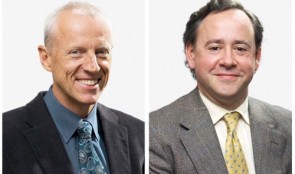
New president, new board members: the Osteology Foundation has voted
The Osteology Foundation has selected three new Foundation Board members: Pamela McClain, Frank Schwarz and Istvan Urban. In addition, Mariano Sanz will become the new President from June 2015 onwards. he end of May 2015 signals the end of the term of office for three present Foundation Board members: Friedrich W. Neukam (Germany), Myron Nevins (USA) and Massimo Simion (Italy). During its meeting of 27 January 2015, the Foundation Board of the Osteology Foundation therefore selected three new members to join the ranks of the Board: Pamela McClain (USA), Frank Schwarz (Germany) and Istvan Urban (Hungary). They will succeed the outgoing members in June 2015. CV Pamela McClain CV Frank Schwarz CV Istvan Urban The term of office of the current president Christoph Hmmerle (Switzerland), who has successfully led the Foundation since it was established and strongly influenced the development thereof, will also end in May 2015. Mariano Sanz (Spain), who will take over as President of the Foundation from June 2015 onwards, was chosen as his successor. Both the Foundation Board members and the President of the Osteology Foundation are selected for a period of four years and may be chosen a second time for a further four years. Voting criteria The candidates for election are nominated by the existing Foundation Board members. The vote itself takes place by means of secret ballot. In addition to professional expertise and international standing, geographical and professional equilibrium constitutes a criterion for nominations and selection. Care is taken to ensure that various countries and cultures are given just as much consideration as the various specialist areas that figure in oral regeneration, i.e. maxillofacial surgery, oral surgery, periodontology, implantology and cell biology. A balance between practice and science is also ensured. Further organisational changes From June onwards, further organisational changes will result from the new elections. The Executive Board of the Osteology Foundation will consist of the new President Mariano Sanz (Spain), William V. Giannobile (USA) as well as Christer Dahlin (Sweden) from June onwards. The Founders Representative will also continue to be represented by Paul Note (Switzerland). Further changes will concern the configurations of the three committees. They will not be definitively decided on, however, until June 2015 when the new members take up their duties during the next Foundation Board meeting. -